Request a Quote
26th February 2026
In the public imagination, East Anglia often conjures images of vast skies, medieval market towns, quiet coastlines, and long stretches of countryside where life moves at a steadier pace. This privileged setting has a reputation for bringing its residents peace and tranquillity at all times.
Yet, behind that postcard image sits a more complex reality shaped by shifting social pressures and the same crime categories seen across the rest of England.
To understand crime in Norfolk, Suffolk, and Cambridgeshire, we must look beyond assumptions. The region includes historic cities such as Norwich and Cambridge, busy commuter corridors, seasonal tourism hotspots, and deeply rural communities. Each setting produces its own patterns. Some areas record consistently low offence rates, while others reflect the pressures that come with growth, nightlife economies, and transport links.
The question, then, is where East Anglia truly stands. Does the data support its reputation as one of the country’s safer regions, or does the picture reveal a different trend beneath the surface?
Suffolk continues to record comparatively low overall crime levels when measured against many other parts of England and Wales. Official figures for the year to March 2025 show around 57.4 offences per 1,000 residents, representing a modest year-on-year decline. Knife attacks also fell during that period, reflecting targeted policing and preventative initiatives.
However, the headline rate tells only part of the story. Even in one of the country’s lower-crime counties, 40,000 incidents are still recorded each year, with violence and sexual offences accounting for 50% of the total. Certain towns and urban centres experience higher concentrations of activity than rural districts, and shifts in categories such as shoplifting and anti-social behaviour continue to draw attention locally.
Official figures show variation by neighbourhood, but overall crime levels in Norfolk and Cambridgeshire sit broadly in line with comparable rural and mixed urban-rural counties across England and Wales. That position places both counties around the national midpoint rather than at the lower end of the spectrum.
Periods of increased violence, shoplifting or anti-social behaviour in town centres can influence annual totals and shape local concern, particularly where population density rises during peak tourism months.
In Cambridgeshire, concentrated pockets of higher activity appear in specific urban wards, highlighting the contrast between historic market towns, rural villages, and busier metropolitan areas.
As the data shows, England is not collapsing into disorder, despite the dramatic narratives that often circulate online. Crime levels across many counties remain stable when viewed in context. That stability, however, does not remove the practical challenges faced by businesses and public spaces. Retail centres, construction projects, transport hubs and leisure venues continue to experience patterns of theft, violence and anti-social behaviour that require a consistent and visible response.
For that reason, a growing number of organisations are investing in manned guarding services in East Anglia.
Manned guarding refers to the deployment of trained, licensed guards to provide physical protection, access control, and active monitoring.
Unlike remote surveillance systems or reactive alarm responses, manned security in East Anglia places a qualified individual at the centre of the protection strategy. These officers patrol premises, monitor entrances and exits, verify identification, manage visitor logs, and respond immediately to suspicious behaviour or emerging incidents.
The strength of manned guarding lies in presence and judgement. A uniformed security guard in East Anglia acts as a visible deterrent, discouraging opportunistic offences before they occur. At the same time, trained personnel assess risk in real time, de-escalate conflict, assist members of the public, and liaise directly with police or emergency services where necessary.
Recognising the importance of manned guarding is one step. Choosing a provider with the scale, structure, and regional understanding to deliver it effectively is another.
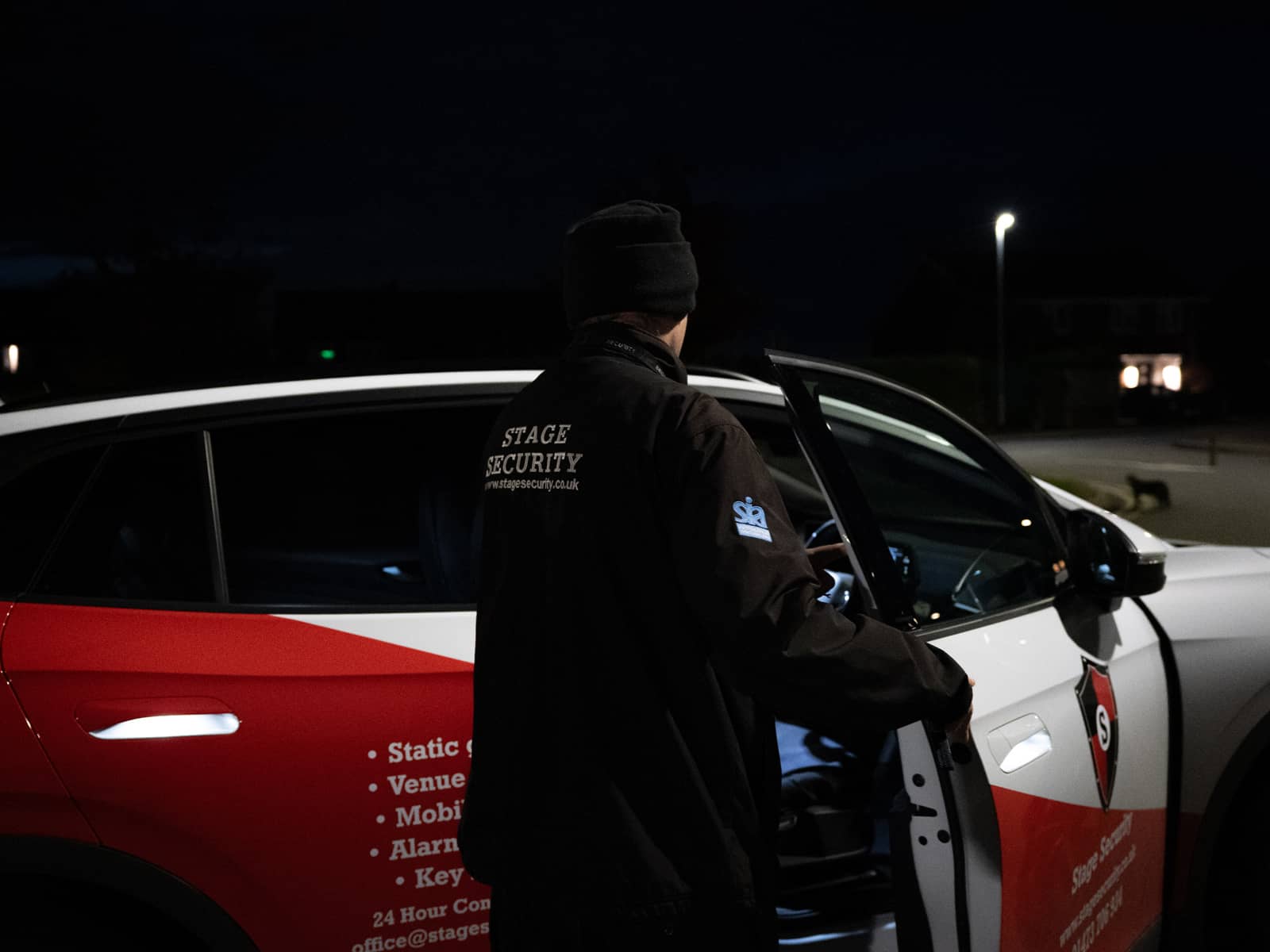
Stage Security operates across the region, delivering professional manned guarding services throughout Suffolk, Norfolk, Cambridgeshire, and Essex. From its base in Ipswich, the company supports businesses across key commercial centres and surrounding districts, ensuring consistent coverage across diverse operational environments.
This regional footprint enables rapid deployment and strong supervisory oversight, whether protecting retail premises in busy town centres, securing large-scale construction developments, safeguarding logistics facilities, or managing access control at corporate sites and public venues. Each assignment begins with a structured risk assessment so that staffing levels, patrol patterns, and reporting procedures reflect the realities of the specific location.
Stage Security’s manned guarding teams consist of SIA-licensed professionals trained in conflict management, incident response, and customer interaction. Officers provide visible deterrence while maintaining a professional and approachable presence, helping to reduce risk, manage incidents promptly, and reassure staff and visitors alike.
For organisations operating across East Anglia that seek dependable, locally informed protection, Stage Security offers a structured solution built around prevention, visibility, and accountability.
To discuss your requirements and receive a tailored quotation, contact us today and take the next step towards strengthening your site’s security.
What our clients say about us
As a leading regional 24/7 security provider, we ensure every member of our team is fully SIA-licensed, highly trained, and prepared to deliver the highest standards of protection. Our commitment to robust quality processes ensures our clients benefit from consistent, reliable, and professional service at all times.
As a local security company, we take pride in offering a personalised approach backed by industry-leading standards. We work closely with each client to understand their needs, ensuring our solutions are tailored, effective, and delivered with care.
Our reliability, integrity, and meticulous planning make us one of the region’s most trusted security providers, being well-equipped to meet your requirements and safeguard your business and assets.
"Stage took the time to understand our business requirements and plans for growth. It was clear that they were the best security provider to partner with our business as we looked to expand in the UK and region of Suffolk. The services Stage has delivered to our business since the start of 2022 have helped ensure our site, staff and property is always protected."
— Sheng Li, FDS Corporation
"We have used Stage security since the beginning of 2022 and have found them to be personable and responsive to our questions and needs regarding a broad range of events. Offering appropriate security personnel to suit each event is key to us, and the team at Stage have always delivered."
— Jonathan Senior, Wherstead Park
"We have been working with Stage Security for a few years now and have always found their service to be very reliable and professional. We would certainly recommend them to other clients."
— Josie Stone, Beyond the Box Student
"The guys were amazing! Super friendly, fully capable, and highly visual. They took onboard our specific instructions, and we're nice to all that attended. Everyone at the event was very complimentary of the guys. I've recommended stage to several people based on this experience already."
— Councillor Ruman Muhith, Ipswich Borough Council
"We are very pleased with the level of service provided and look forward to continuing our partnership with them moving forward."
— Elmstead Place, Yugo
"Stage Security has been an invaluable partner in safeguarding our Ipswich office. Their professionalism and prompt response times consistently reassure us and allow us to focus on our core operations. Since partnering with Stage, we’ve seen a marked improvement in service quality and reliability. We confidently recommend them as a trusted, first-choice security provider."
— Birketts LLP
"I wanted to pass on a compliment for the security team working at the Regent on the 27th Feb: Another amazing security team- Allen, Kelly and Keira. They were proactive at the start helping to hand out wristbands to customers and putting smiles on people’s faces. Great customer service!"
— House Manager, Ipswich Regent Theatre
"Thank you to your two guys who were patrolling Christchurch Park today. They were very friendly and approachable. They took time to speak to the young people who were enjoying being in the park. As a parent it is very reassuring that they are in the park, and if there is any problems people know that they can approach them and they are there to help!"
— Lisa Cooper
"May I take this opportunity to say thank you, it has been a pleasure dealing with you and the company. Also, we all wanted to pass on our personal thanks to David who was such a nice person and he did such a good job giving us such peace of mind (and a much needed break every night after such long days!)."
— Katrina Robertson, Whitton Parish
"Kieran was the best front-of-house SIA security staff member we have worked with for years. He was attentive in what was going on, helpful and approachable with the customers. The little jobs I often have to remind staff to do just happened without prompt, he wasn't in a rush to leave for his later job, and he wasn't constantly on his phone in front of the customers."
— Shaun Whymark, Ipswich Regent Theatre
"I would like to thank Adam Howes and his team for their work and support at Suffolk Pride 2019. They brought their professional expertise and clear understanding of our needs to our event. They understood and delivered our objectives for the day in a proficient and skilled manner whilst carrying out their role."
— Suffolk Pride
"Thank you and to your team so much for Wednesday. You really were superstars and I can’t thank you enough for all your help and support. From the word 'go' you were all so professional and just got on doing what you do best."
— Sarah Shinnie, Suffolk District Council
"A very big thank you to you and your staff for a successful event (Stowmarket Christmas Fayre) that was held yesterday (28th Nov 2021). Your staff were exemplary, actively engaging with members of the public, reinforcing the road closure and also alerting myself and other Town Council staff to potential issues of concern. Thank you once again."
— Michael Marriott, Stowmarket Town Council
"I wanted to say a big thank you and well done to the security who worked here last night, especially Steph and Karl. We had a first aid incident which involved a lady fainting. Steph was very quickly on the scene and took a lot of control of what was happening."
— Mark Wright, Operations Manager, The Apex
"I wanted to write to say how brilliant your two security guards were at the school ball. They were the best we have had. They were friendly and professional, worked the whole time and were very observant with regards to the behaviour of our students; they were proactive about stepping in when required."
— Mrs Isobel Tyndale-Brown, Woodbridge School
"We held a music festival at our Holiday Park for over 3000 people, guests and owners. Hiring Stage Security was a simple process, from start to finish with professional care and regular communication throughout the whole preparation time before the event."
— Kelly Evans, The Orchards Holiday Village